How to Set Up a Records Storage Unit So You Can Find Any File in Five Minutes


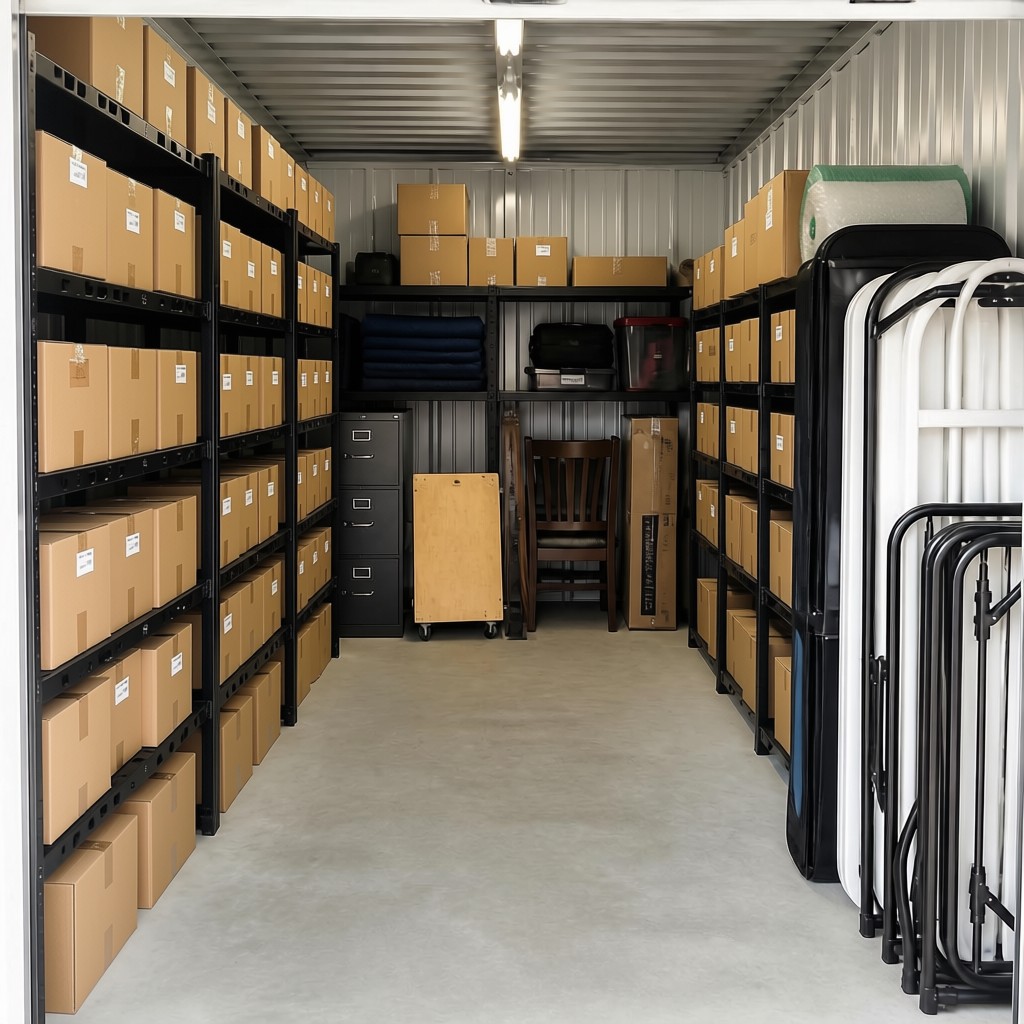
Somebody calls about a 2019 file. A records unit passes or fails right there. Either someone drives over, walks to the right shelf and is back at their desk inside the hour, or they spend an afternoon lifting boxes off of boxes. Most of that comes down to how the unit was set up on the first day. This is the setup we would use for a law, medical, accounting, insurance or title office in downtown Waco. None of it costs much. Most of it is a marker and a spreadsheet. How long each box has to stay is a separate question. We covered it in How Long Does a Waco Office Have to Keep Its Files? Your own retention schedule, from your board, your CPA or your attorney, is the one to follow. Start by counting boxes, not guessing a size Count what you have now. Then add a rough guess at what one more year of closed files adds. That second number matters more than the first, because a records room only grows until the first purge. The math is simple. A standard banker's box measures about 10 inches tall, 12 inches wide and 15 inches deep. Stacked no more than about five high, each stack takes a floor spot about a foot wide and fifteen inches deep. Then take away room for a walkway, because a unit packed wall to wall is storage you cannot use. Here is roughly how that works out in the small sizes, with boxes five high and the 12-inch end facing out where you can read it: 5x7.5: two rows down the long walls with a walkway between them. About 7 stacks a side, so roughly 70 boxes. 5x10: the same two-row layout, about 10 stacks a side, so roughly 100 boxes. 10x5: a row along the back wall and a short row down each side, open in the middle. Roughly 80 boxes. 10x7.5: the same U shape with longer sides. Roughly 110 boxes. Treat those as starting points. Where the door sits, ...


—
November 10th, 2026


How Long Does a Waco Office Have to Keep Its Files?


Every office downtown has the same closet. It started out holding printer paper. Now it holds nine years of closed files, and nobody is sure which boxes can go. How long you have to keep them depends on what your office does. Below are the minimums we found in the rules themselves, checked in October 2026. One thing first. We run a storage building. We are not lawyers or accountants, and this is not legal advice. Rules change, and plenty of files run longer than the minimum: a child's medical chart, anything tied to a lawsuit or an audit, anything your insurer or a contract tells you to hold. Confirm your own numbers with your licensing board, your CPA or your attorney before a single box goes to the shredder. Tax and payroll records, for every office The IRS ties record keeping to how long a return can still be questioned. 3 years for the records behind a return, in the ordinary case. 6 years if income was left off a return and it came to more than 25% of the gross income shown. 7 years if you claimed a loss from worthless securities or a bad debt deduction. At least 4 years for employment tax records, counted from the date the tax was due or the date it was paid, whichever is later. Property records stay until that period runs out for the year you sell or dispose of the property. The IRS also says to check whether an insurer or a lender needs them longer before you throw anything out. Medical practices The Texas Medical Board's record retention rule (22 Texas Administrative Code §163.2) sets the standard period at at least seven years from the date of last treatment by the physician. For a patient who was under 18, the chart stays until the patient turns 21 or for seven years from the last treatment, whichever is longer. Other state or federal law can stretch either one. Dental practices The State Board of Dental Examiners rule (22 TAC §108.8) says not less than ...


—
October 16th, 2026


Moving to Waco, TX? Your Local Storage and Moving Guide from Downtown Storage

Moving Guide


Downtown Storage self storage office at 1225 Franklin Ave in downtown Waco, TX — climate-controlled, ground-floor units

Moving to Waco: A Local Guide to a Smoother Move Moving to Waco, TX is a lot easier when you have a clean, climate-controlled place to stash your boxes while you settle in, and this local guide walks you through every step. Whether you are landing a new job downtown, buying your first house, or just ready for a change of scenery along the Brazos, a move brings a hundred little decisions all at once. This guide is here to make a few of them simple. At Downtown Storage, we help people move in and out of Waco every week. We have seen the smooth moves and the stressful ones, and the difference almost always comes down to a little planning and a place to put things while the dust settles. So let's walk through it together, from the first box you pack to the day you finally kick your feet up in your new place. Why People Are Moving to Waco Waco has quietly become one of the more appealing places to live in Central Texas. It sits right between Dallas and Austin on I-35, so you are never too far from a big city, but the pace here is friendlier and the cost of living is easier on the wallet. The downtown area has come back to life over the last several years, with new shops, restaurants, and places to gather along the river. Families like the room to breathe. Young professionals like the shorter commute and the growing job market. Retirees like the mild weather and the slower rhythm. Whatever brings you here, you are joining a lot of good company. And no matter which neighborhood you land in, one thing stays true: Central Texas summers are hot and humid, and that has a real effect on how you store your belongings during a move. Start With a Simple Moving Timeline The biggest favor you can do for yourself is to start early. A move feels overwhelming when everything happens in the ...


—
August 31st, 2026


What Size Storage Unit Do I Need? A Waco Renter's Guide

Renters Guide


a view of a clean unit with boxes stacked in an organized way

Picking self storage in Waco, TX is easy once you match the unit size to what you're actually storing, and this guide walks you through it step by step. Most people don't rent a storage unit very often, so it's normal to feel unsure about how much space you'll need. Rent a size too small and you're stacking boxes to the ceiling and squeezing past furniture. Rent one too big and you're paying for empty air. The good news is that sizing a unit isn't complicated. Once you know what you're storing and how you want to reach it, the right size becomes pretty obvious. At Downtown Storage in Waco, we help people figure this out every week. This guide breaks down the common unit sizes, gives you real-world examples of what fits in each, and shares a few simple tricks to get the size right the first time. How Storage Unit Sizes Work Storage units are measured in feet, width by length, just like a room in your house. A 10x10 unit is ten feet wide and ten feet deep, which gives you 100 square feet of floor space. Ceilings are usually tall, often eight feet or more, so you also get a lot of vertical room to stack boxes and totes. That vertical space matters more than people expect. When you stack smartly, a smaller unit often holds more than it looks like it should from the doorway. We'll come back to that later. A quick note on how we do things here. Every unit at Downtown Storage is climate-controlled and sits on the ground floor, so you're not sizing around stairs, elevators, or a second-story hallway. You back up, you walk in, and you load. That makes the whole sizing question simpler because you're only thinking about what fits, not how you'll haul it upstairs. The Common Storage Unit Sizes, Explained Here's a plain-English look at the sizes most renters choose and what typically fits in each. Think of these as ...


—
August 24th, 2026


Climate-Controlled Storage in Waco, TX: Is It Worth It?

Climate-Controlled


Climate-controlled self storage units at Downtown Storage in Waco, TX

Shopping for self storage in Waco, TX and wondering whether climate-controlled units are worth the extra money? In Central Texas, the short answer is usually yes — and this guide walks through exactly why, what climate control does (and doesn't) do, and how to tell if you actually need it for what you're storing. We're a little biased, since every unit at Downtown Storage is climate-controlled. But we'd rather explain the real reasoning than just tell you to buy it, so here's the honest version. Why Waco weather makes climate control matter West Texas storage is one thing. Central Texas is another. Waco summers are long, hot, and humid — we regularly bake through stretches of upper-90s and 100-degree heat, and unlike the dry parts of the state, we get real moisture in the air. Then winter drops in a hard freeze or two just to keep things interesting. That swing is exactly what's hard on your belongings. A standard metal storage unit with no temperature control can climb well past 100 degrees inside on a summer afternoon — hotter than the air outside. Add humidity, and you've got the two ingredients that warp wood, crack furniture glue, cloud photographs, grow mildew on fabric, and corrode electronics. Climate control keeps the unit in a steady, moderate range year-round, so your things sit in the same comfortable conditions you'd keep them in at home. If you're only stashing a lawnmower and some yard tools for a month, that swing might not matter. But for most of what people store, Waco's heat and humidity are a real reason to keep things climate-controlled. What "climate-controlled" actually means It's worth clearing up, because the term gets used loosely. A climate-controlled unit is heated and cooled to hold a steady, moderate temperature — and in a humid area like Waco, it also keeps humidity in check. That's different from a standard drive-up unit, which is just a metal box exposed to whatever the weather's doing outside. What it doesn't ...


—
August 19th, 2026